
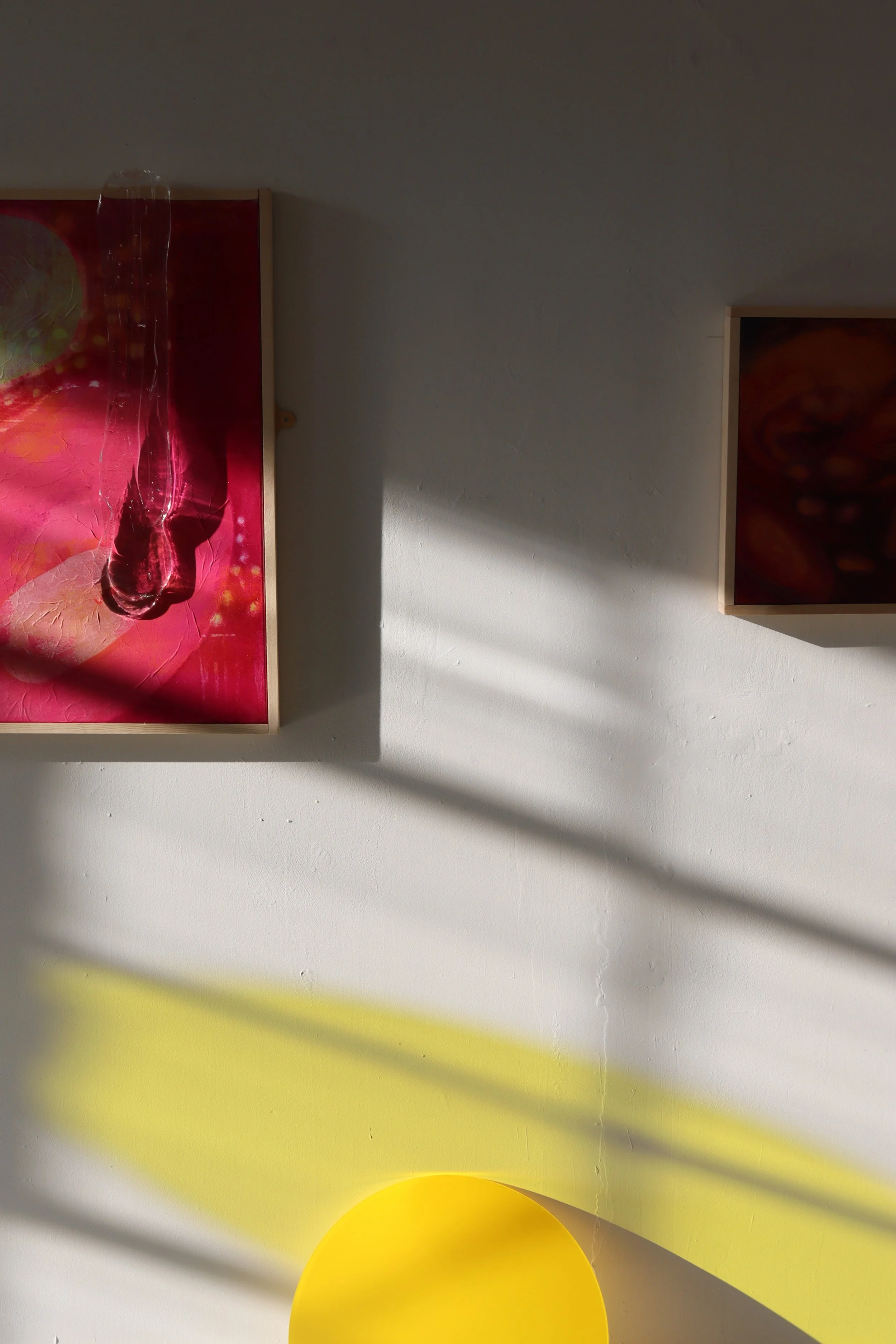

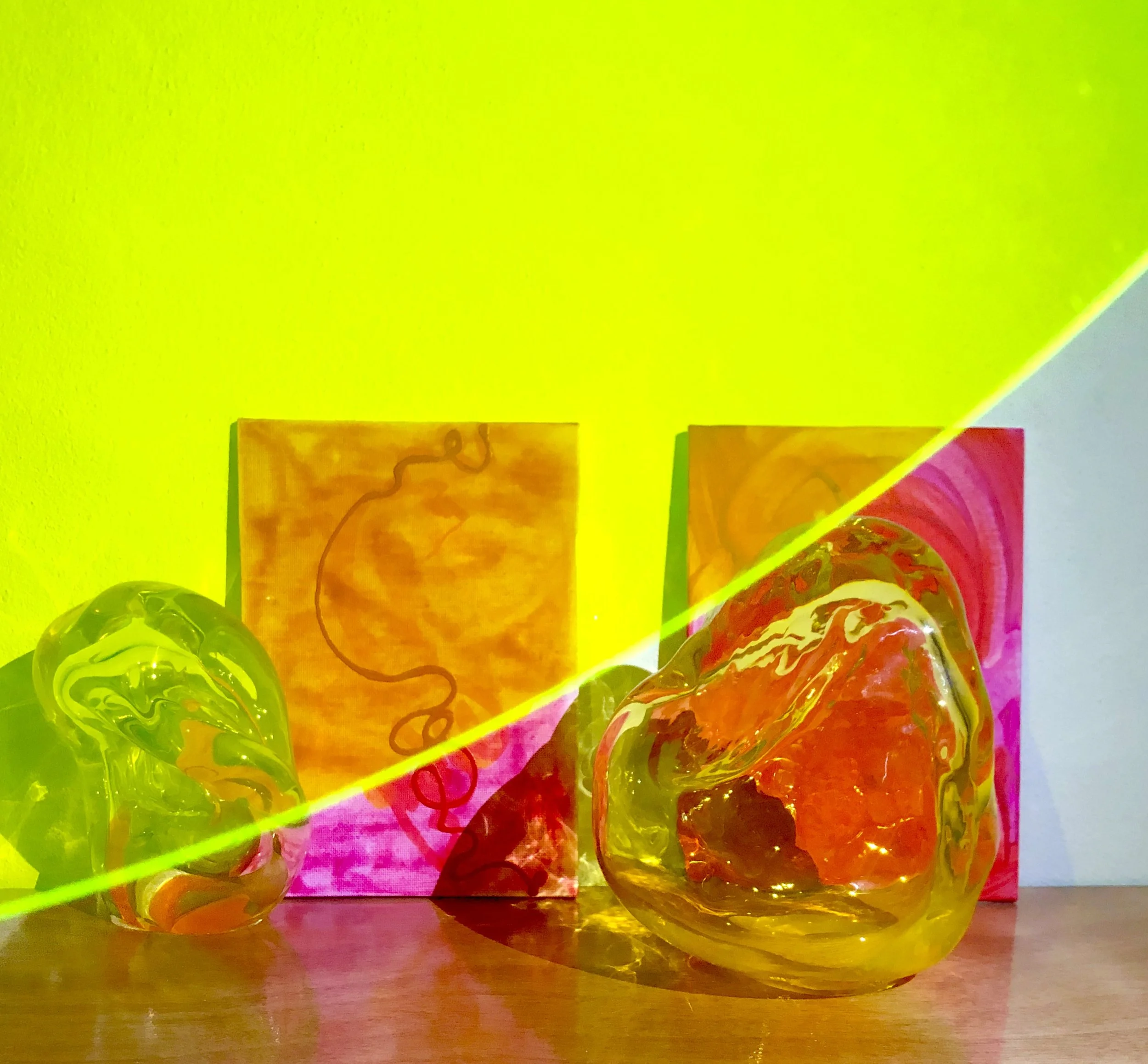
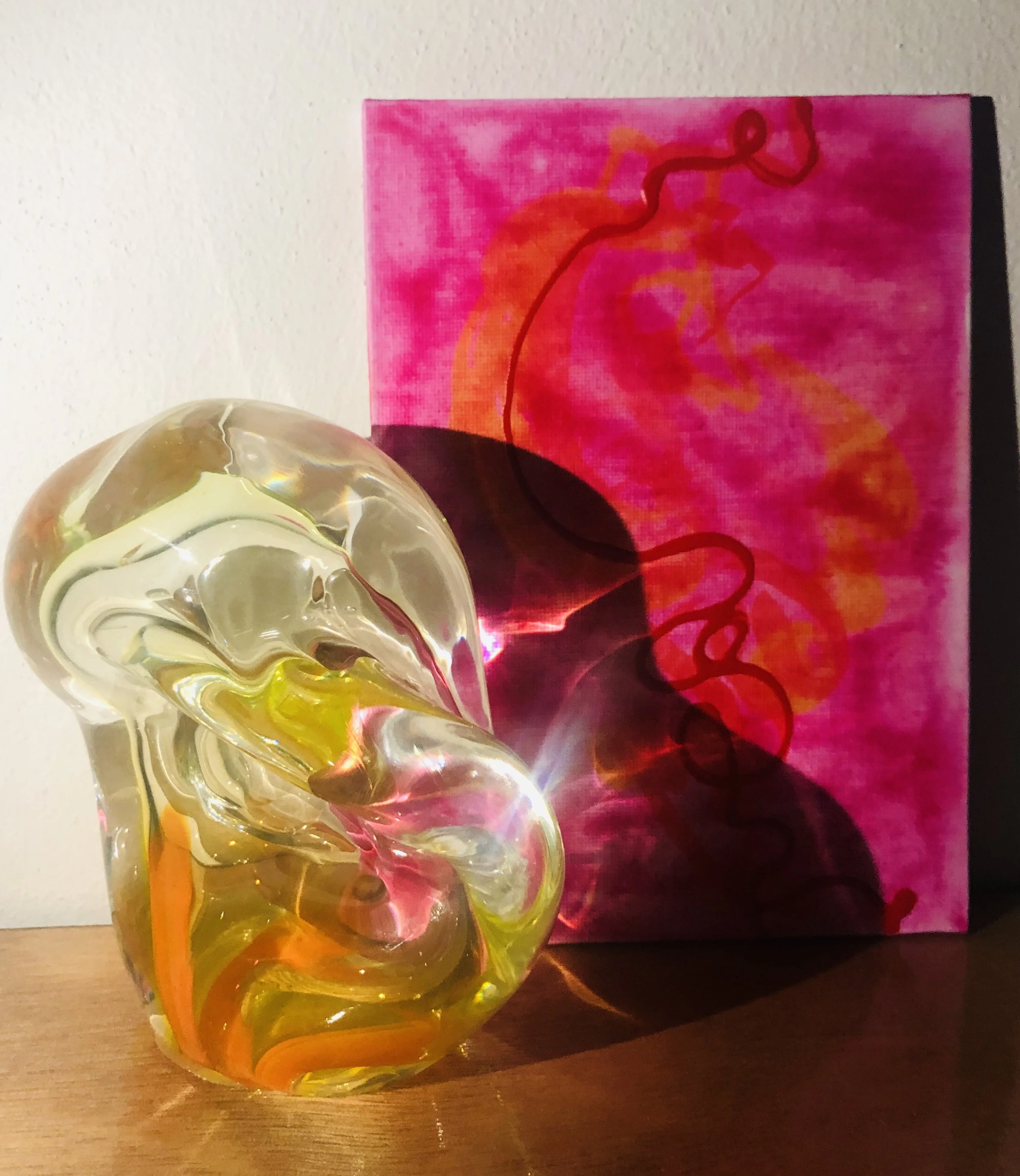
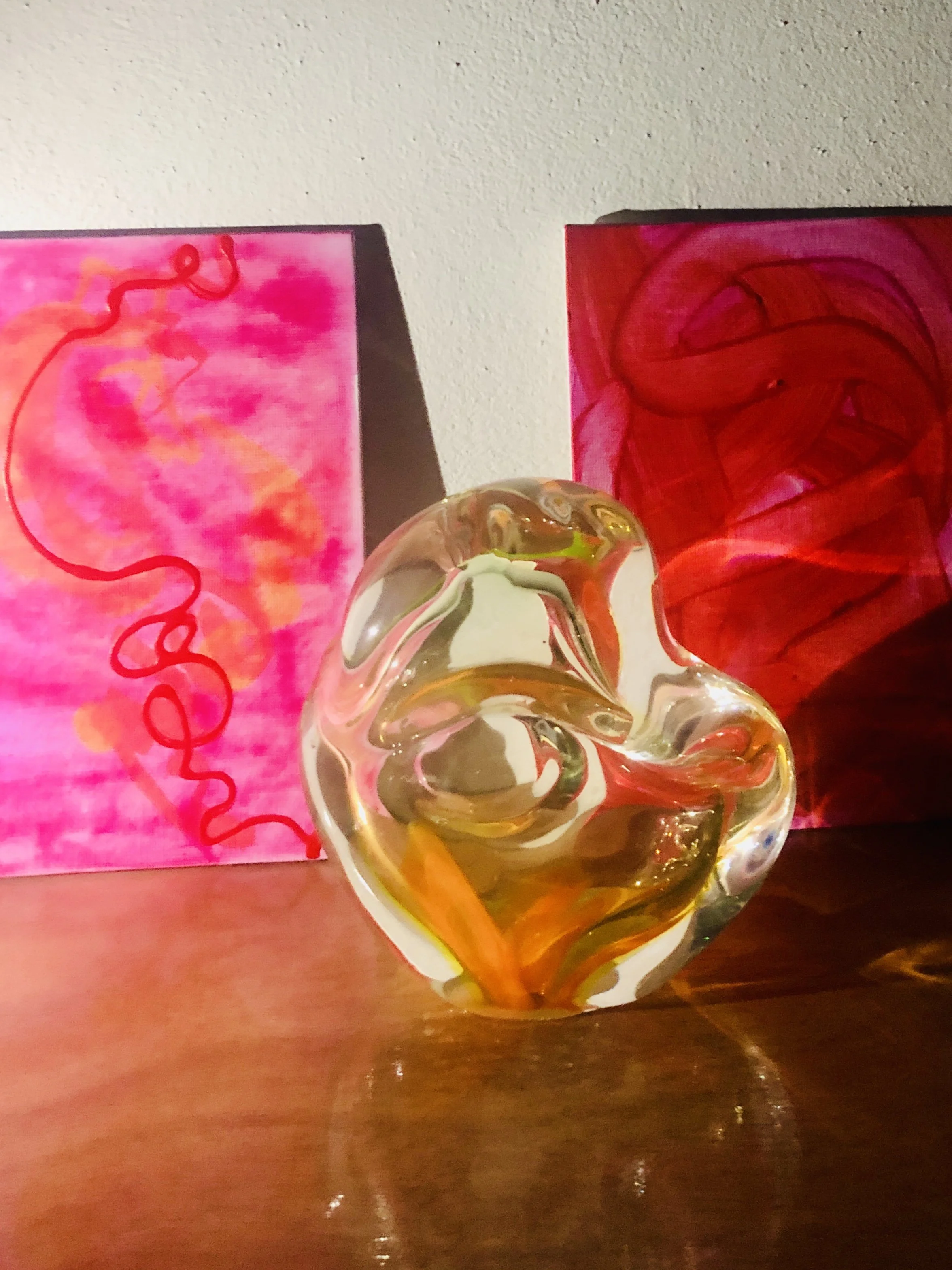
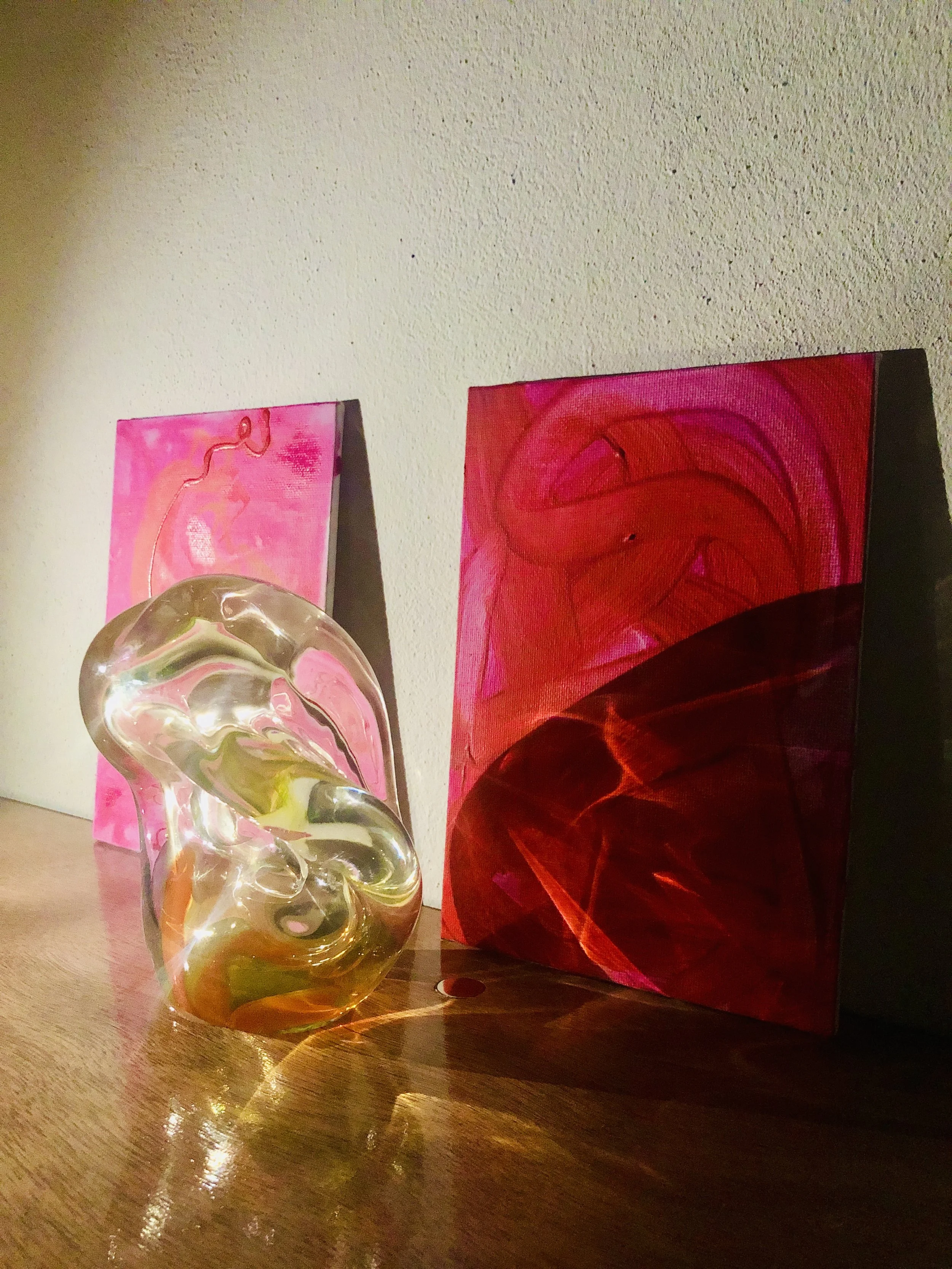
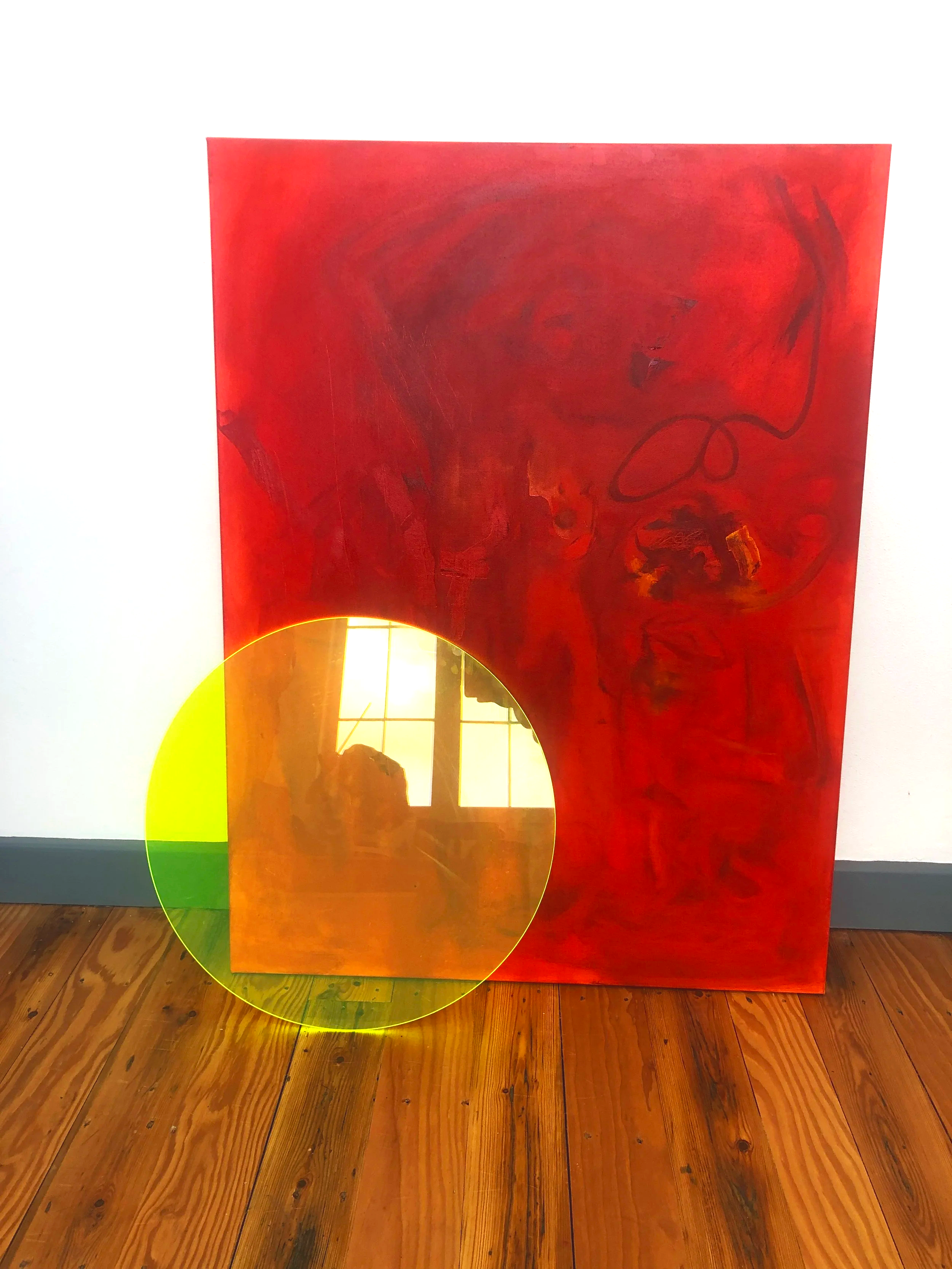
Fluid Forms is an exhibition of new works presented by Ames Truscott and Tilda Williams-Kelly featuring works of art in sculpture and painting respectively. With an emphasis on process, experimentation and play, Fluid Forms exists as a colourful and juicy landscape of abstracted figures and forms in relation to the question: What does occupying a body feel like?

Documentation by Douglas Tyrrell-Bunge, Saltspace Co-op, Glasgow, 2024


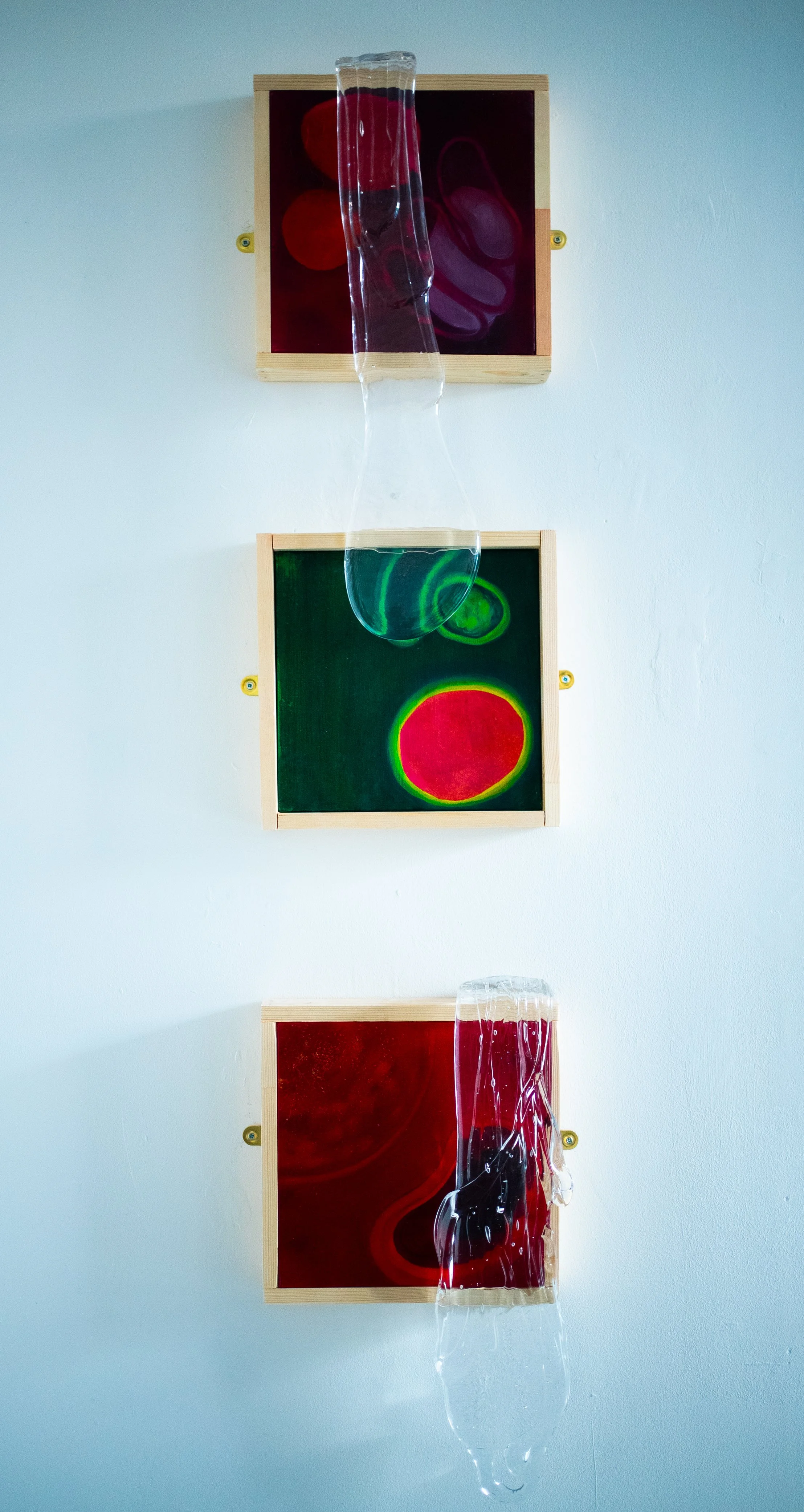


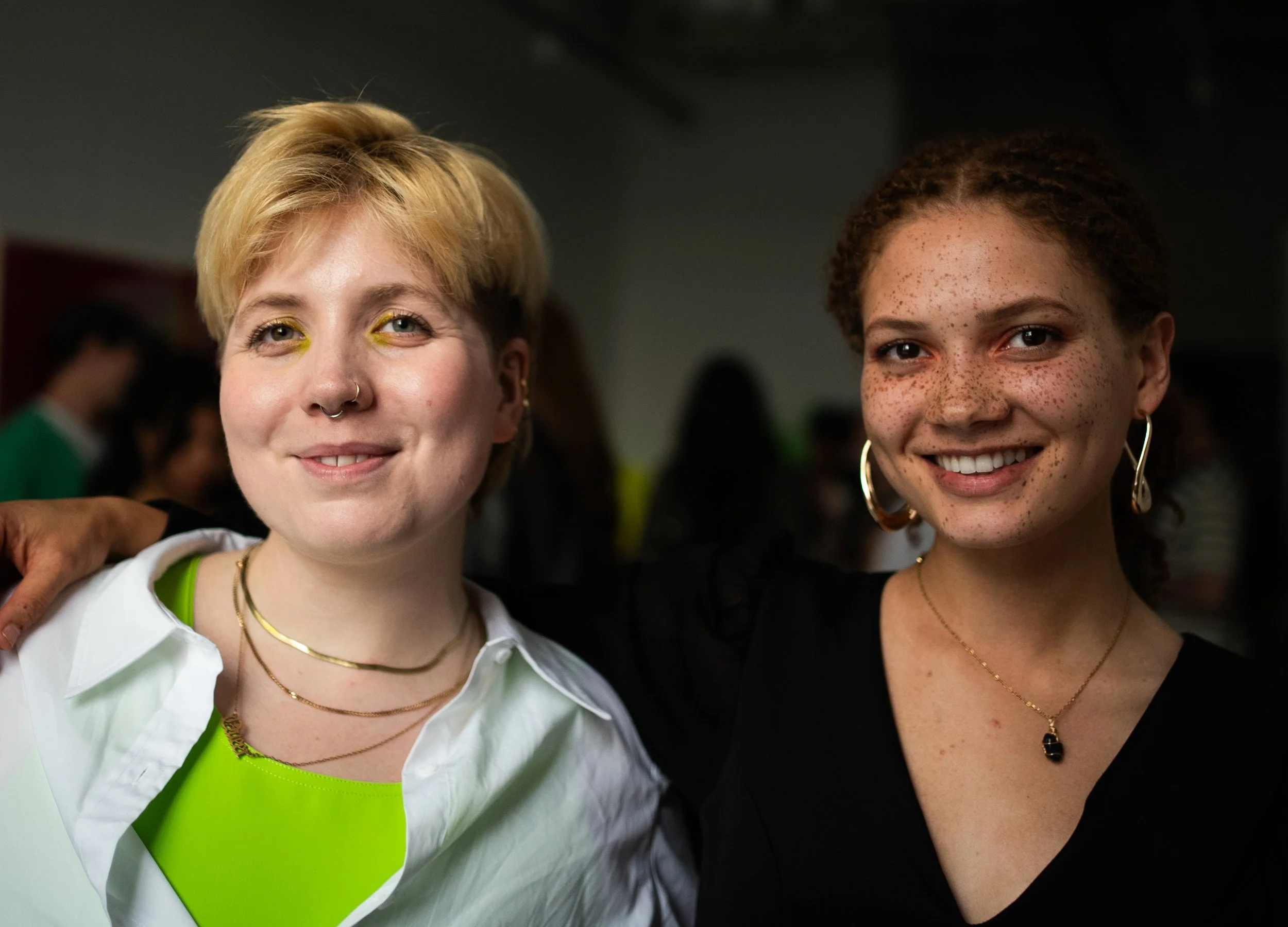
As a glass-maker (AT) and oil painter (TWK), we would describe our roles as traditional art-making within contemporary dialogue. We both feel an urgency in upholding material and physical making within the arts, in an ever-increasing digital age.
Having met on the Hospitalfield Graduate Programme 2024, Ames and Tilda recognised a kinship between their practices. While very different, they seemed to have similar processes: For example, both oil painting and glass-blowing take place within a window of time while the medium is fluid, before drying/cooling into the desired shape. They are both disciplines that have been brought up and raised by artists over thousands of years, and have morphed and changed within contexts of their time. Most importantly, Ames and Tilda recognised a dedication to the process of these two disciplines and asked each other, how can oil and glass support and combine with one another?
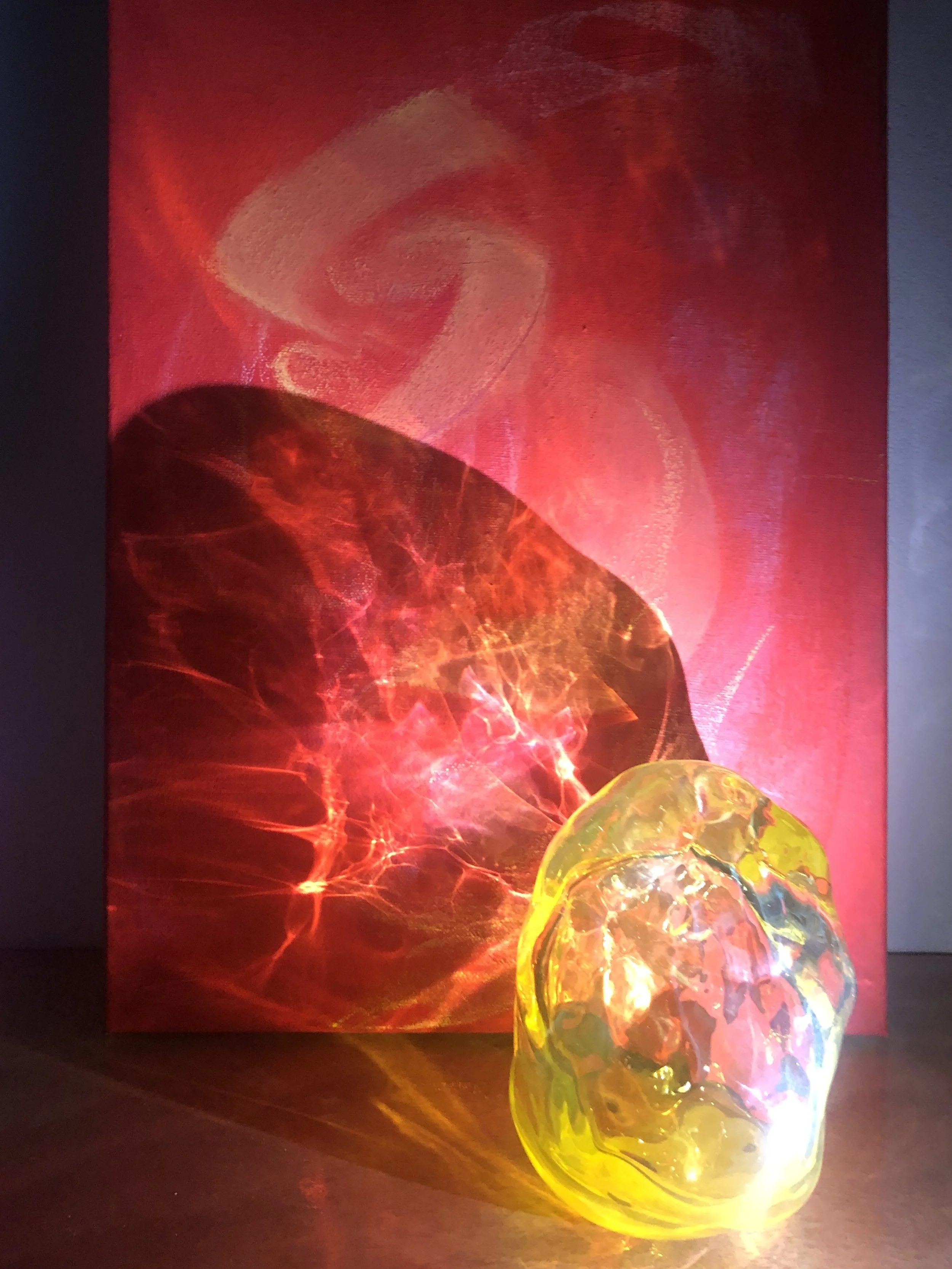
Engaging in exciting discussion on residency they recognised that these similarities could amount to something more when the contextual is considered. It became clear both our practices follow a line of thought on occupying a body. The idea grew very naturally into a visual presentation of colour and light via our forms of oil painting and glass-making, with an emphasis of colour theory in both painterly forms and transparent sculpture.
Concept / play / ideas forming at Hospitalfield:
Ames Truscott
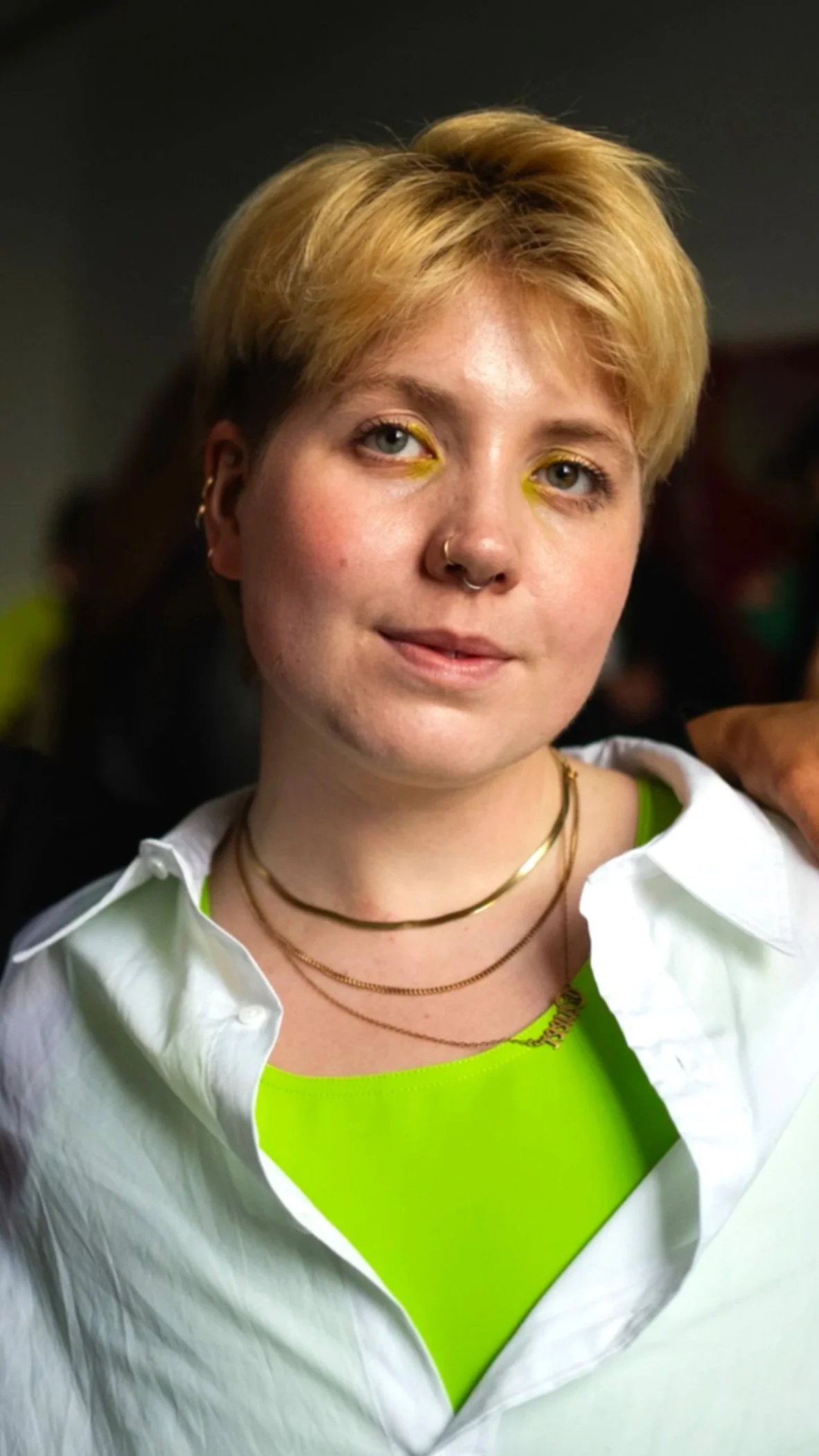
Ames Truscott (they/them) is a glass and sculpture artist whose work focuses on the interactive nature of art pieces as physical objects, but also on the fluidity of materials and on the transformative role of light. As a queer and disabled artist, they are passionate about keeping art accessible for all and creating a space in which art can be enjoyed and experienced at any level whilst acknowledging the intersectional parts of their identity and their privilege. Their work exists in the intersectionality of their identities, within the vast spectrum of queerness and neurodivergence, and they aim to create not only for their community but for anyone who wants to enjoy and explore art.